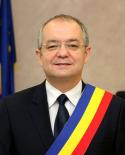
EPP-CoR coronavirus response task force members discuss EU's recovery with MEP Esther de Lange
Lessons learned from the pandemic, the importance of vaccination and increased production as a durable way out of the crisis, the issues arising from non-EU centrally approved vaccinations, communication in the era of scepticism as well as EU instruments for a sustainable recovery from this crisis were the key points discussed by members of the EPP-CoR Coronavirus Response Task Force during an exchange of views with Esther de Lange MEP, Vice-President EPP Group in the European Parliament and Chair of the EPP Working Group on the Economy and Environment held as part of the third remote meeting of the Task Force.
Olgierd Geblewicz, President of West Pomerania Region and the EPP-CoR group said that the pandemic is not only leaving a long-lasting negative impact on regions and cities, but it also making communities more resilient. Geblewicz said "This Task Force is an important step that shows the commitment of our group to the COVID-19 recovery measures focused on a sustainable economic and social recovery of Europe's villages, towns, cities and regions.
MEP Esther de Lange said that all over Europe local and regional governments are leading the fight against the virus and the drive to vaccinate all Europeans. "In the face of future cross-border crises, I am glad to work together with the EPP-CoR team and bring together best practices to strengthen our joint response." de Lange also emphasised the need of better communication as a means to respond to cross border health threats and the need to engage regions as part of the preparedness exercise.
Birgitta Sacrédeus, member of Dalarna Regional Council recalled that in 19 of 27 member states, local and regional authorities are responsible for health. Speaking on multi-level governance, Sacrédeus said that the pandemic showed how important it is to work together and called for more engagement of the local and regional level in recovery process.
Michael Murphy, member of Tipperary County Council and ECON Chair said that over the past year, local and regional authorities led by example in terms of community support but also in terms of support for enterprises. On communication, Murphy said that according to polling data, 85% of Irish citizens would either probably or definitely take the vaccine and thus communication is key to address remaining scepticism. In this regard he said that local and regional authorities can play a role to ensure flow of information to the local level. Murphy added that local and regional authorities need to be fully engaged in the National Recovery and Resilience Plans (NRRP) as to date a minority have been consulted and only in few of such cases were views of local and regional authorities taken on board. "Failure to involve local and regional authorities will be detrimental to the recovery process as they are best placed to reach with precision where support is badly needed".
Eddy van Hijum, member of the Council of the Province of Overijssel said that SMEs are the cornerstone for Europe's recovery in a green way but also to boost employment. He called for a level playing field and expressed concern on tax burden put on SMEs to move to a green economy.
Emil Boc, Mayor of Cluj-Napoca and former Prime Minister of Romania said that an outbreak somewhere is an outbreak everywhere and thus no one is safe until everyone is safe. He added that emphasis needs to be made on local jobs. He appealed for a COVID-19 vaccination certificate and for Europe to speak with one voice in one language in terms of vaccination certification and PCR tests to ensure clarity and the restart of tourism. He also called for recovery plans to be ratified in a short time as there is a great deal of enthusiasm from citizens.
Gaetano Armao, Vice-President of the Sicily Region said that the pandemic risks deepening disparities between and within Member States. "The lack of a coordinated and timely EU action will increase the gaps between more and less developed communities. Member States, regions, cities and municipalities are today on the frontline of the COVID-19 crisis and the EU 2021-2027 budget and the post pandemic recovery plan must help them protect citizens, support local economies, make local communities resilient to crises while creating a sustainable future." He added that in the case of Italy, the NRRP is the last chance to overcome the North-South divide in the country.