The setting up of cross-border contact groups, shortage of vaccines, additional support for island with no hospitals, the need to create uniform and comparable criteria throughout Europe as well as the need to give more resources to LRAs to fulfil their role as frontliners were the main points discussed by EPP-CoR members during a plenary debate on the COVID-19 pandemic with Stella Kyriakides, Commissioner for Health and Food Safety.
Apostolos Tzitzikostas, European Committee of the Regions (CoR) President and Governor of Macedonia paid tribute to people who lost their lives, key workers and front liners who are working tirelessly as well as the local and regional authorities (LRAs) who are fighting together with local communities against the virus. "People want to hold their loved ones, travel and go to work. We need to open Europe safely in a coordinated manner. We need to accelerate vaccination. The pandemic has shown that every level of governance plays a fundamental part. It is time to rethink and restart Europe and this goal can be achieved by having regions and cities on the frontline."
Kyriakides said that to emerge stronger, Europe needs to act together. She added that solidarity is embedded in the European vaccination strategy and welcomed the work of the CoR, including the EPP-led opinions on the EU Health Emergency Mechanism and cross-border health threats. Kyriakides appealed for the support of LRAs. "We need you, as the level closest to citizens and the most trusted, to encourage citizens to get vaccinated."
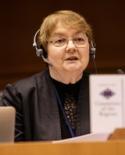
Joke Schauvliege, Member of the Flemish Parliament and CoR rapporteur for the opinion on ‘Experiences and lessons learned by regions and cities during the coronavirus crisis’ said that national governments and EU institutions should take measures to reduce regional inequalities in health systems and bottlenecks in emergency preparedness based on most recent cities' and regions' experiences on the ground. She added that cross-border cooperation should be part of all emergency plans. The CoR proposes that interregional, cross-border contact groups be set up to improve cross-border communication and collaboration between Member States and border regions.
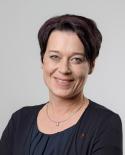
Birgitta Sacrédeus, member of Dalarna Regional Council and CoR rapporteur on the EU Health Emergency Mechanism, said: "It is very good to see the CoR's calls for an EU health-emergency mechanism taking shape, in the form of the Health Emergency Preparedness and Response Authority (HERA). It is imperative to bring back production of certain medicines or critical substances, including vaccines, to European soil to address shortages and reduce our dependency on third countries. We are expecting bold and concrete proposals from the Commission for measures to ensure the EU's strategic autonomy in normal circumstances and in a crisis" Sacrédeus who is the CoR rapporteur for the opinion on the ‘Pharmaceutical strategy’ and the ‘New mandate of European Medical Agency (EMA)’ recalled that in 19 out of 27 Member States healthcare is decentralised, whereby LRAs are in charge of public health, crisis preparedness and management. She said that regions such as Dalarna are responsible for vaccination roll out but were experiencing a shortage of vaccines.
Barbara Hegedűs, member of the local government of Veszprém said "LRAs can help that the citizens get proper information, be well informed about the vaccines, so that fake news does not influence the success of the vaccination process.”
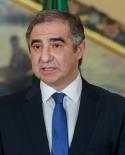
José Manuel Cabral Dias Bolieiro, President of the Regional Government of Azores spoke on the challenges faced by small islands with no hospitals and which can be cut off for days. “We call for an increase in the allocation of vaccines to Member States with Outermost Regions, with islands that do not have a hospital. Let us be clear: we do not want to withdraw from the national quotes, but rather to increase the quotes in these Member States”.
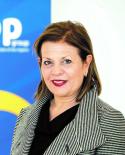
Eleni Loukaidou, Councillor of Nicosia Municipality said that Cyprus managed to control the pandemic, with the lowest loss of human life. She emphasized the crucial importance of citizens' response. "It has been found that where people do not follow the relevant measures, the situation can go out of control in a few days, with disastrous consequences" she concluded.
Sonja Ledl-Rossmann, member of the State Parliament of Tyrol said "Our tools to fight the virus are becoming more and more effective: testing, tracing and vaccinating will bring us back towards normality. Tyrol stands out for its particularly high testing rate. However, the measures must also be evaluated correctly, not only on the basis of incidence figures. Far-reaching measures like travel warnings can only be justified if other factors such as the number of tests carried out, the percentage of the population regularly tested, the hospitalisation rate and the available hospital or intensive care beds are taken into account. It is high time to create uniform and comparable criteria throughout Europe in this respect!"