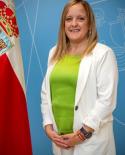
Isabel Urrutia, Regional Minister for the Presidency, Justice, Security and Administrative Simplification of the Government of Cantabria (Spain) has been appointed rapporteur for the opinion on the “European Preparedness Union Strategy” by the CoR Nat Commission.
The European Commission and European External Action Service has recently published a joint communication on Preparedness Union Strategy to prevent and respond to emerging threats and crises in Europe. It comes as the EU is facing increasingly complex crises and challenges that cannot be ignored. From growing geopolitical tensions and conflicts, hybrid and cybersecurity threats, foreign information manipulation and interference, to climate change and increasing natural disasters, the EU needs to be ready to protect its citizens and the key societal functions that are crucial for democracy and daily life. The Strategy includes 30 key actions and a detailed Action Plan to advance the Preparedness Union's objectives.
In her first reaction Urrutia said "Regions have a crucial role to play in Europe’s preparedness. We are an active part of the Union and, with our deep knowledge of the territory, we experience firsthand the complex challenges our societies face. Knowledge, planning, anticipation, training, awareness, preparedness, and response are essential pillars of the Civil Protection System we have in Cantabria. From regions and cities, we contribute our experience to ensure that Europe is ready and equipped to face any threat. As rapporteur of the CoR opinion, I will advocate for ambitious preparedness and a multi-level governance that strengthens Europe’s response capacity".
Urrutia brings extensive experience in civil protection and crisis management, acting as the highest regional authority in Cantabria for all emergency response planning and operations. In Spain, regional governments hold primary competences in this field, including activation and implementation of emergency plans for natural disasters, industrial risks (SEVESO), radiological threats, energy blackouts, and health crises. Ms. Urrutia has personally led responses to a wide range of complex emergencies at regional and even supra-regional levels.
A notable example of her leadership was her coordination during the recent nationwide power outage, where Cantabria’s territorial emergency plan (PLATERCANT) was activated at its highest level. Under her direction, the region restored normal operations in under six hours—ensuring the continuity of hospitals, transport, communications, and handling over 1,500 emergency calls.
Given Cantabria’s complex geography—mountainous terrain, over 220 km of coastline, and more than 6,000 caves including UNESCO World Heritage sites—the region demands high-level emergency expertise. In the past year alone, 446 emergencies were managed and 289 people assisted under her watch.
In the last two years, she has overseen five emergency plan activations, including forest fires, marine pollution from microplastics, coastal floods due to tidal surges, and national-scale blackouts. Moreover, she is actively involved in:
• The development of a cave rescue module under the EU Civil Protection Mechanism,
• The WELL-SAVER KAPP 2025 project for borewell child rescues, and
• The coordination of multiple high-level simulation exercises, including SEVESO chemical risk drills, a radiological incident at a university hospital, and a civil aviation accident with over 240 participants.
The EPP-CoR group and its members have been very actively working on this topic. In April EPP-CoR local and regional leaders met in Valencia to call for a comprehensive and societal approach to preparedness and resilience. They adopted a declaration which sets out a shared vision for strengthening Europe’s preparedness through multi-level governance, strategic investment, and societal engagement.
Indicative timeline for adoption:
- exchange of views in the NAT commission on 11 July;
- discussion and adoption in the NAT commission on 23 September;
- Final adoption at the Plenary session on 10-11 December.