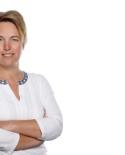
"The European Commission has to establish a multi-stakeholder platform on sustainable food systems, involving the European Committee of the Regions together with other relevant stakeholders and civil society, thus creating a supporting network that would facilitate the transition to more sustainable food systems for European regions and cities while taking into account regional disparities." Joke Schauvliege, Vice-President of the Flemish Parliament made these remarks when presenting her opinion on 'Legislative framework for sustainable food systems' to the CoR NAT Commission.
In her opinion, Schauvliege highlights the role of cities and regions in shaping food environments, ensuring that sustainable and healthy diets are the easiest and most affordable choice while supporting sustainable producers. In this regard, she pointed out the importance of urban planning in limiting access to unhealthy food and facilitating access to healthy food options. This is especially important in the vicinity of schools.
With respect to food public procurement, the rapporteur underlines that public procurement of sustainable, healthy, seasonal and local food represents a powerful tool for transition to more sustainable food systems in line with the sustainability policies and the Sustainable Development Goals. In this regard she calls for the development of practical guides for procurement officials on how to use procurement to promote sustainable development goals and healthy, seasonal, local and organic diets. She advocates creating and financially supporting networks for public procurers to share guidance, expertise and best practice. Schauvliege also called on the EU to ensure food security and to invest in sustainable local agriculture production, and shorten its supply chains;
Addressing the NAT Commission, Herbert Dorfmann, Member of the European Parliament (EPP Group) said "We need to consider consumers' choices when they buy food. Farming is influenced by the decisions that consumers make. A large number of people would like healthy food of course, but there is huge gap between what they say and what they actually do."
In this regard, Dorfmann proposed two actions:
1) Raise awareness. Make it clear to people how important it is to eat healthy
2) Reduce food waste. By throwing away less food, farming would profit as well.
Dorfmann also spoke on the need to introduce labelling systems, QR codes for example, to provide information to encourage people to make sustainable choices. He added that food retail is an issue: a kilo of fruit or vegetables costs the same as meat sometimes so consumers easily opt for more unhealthy choices. He said that the cost of living is going up, and as a result the organic food sector is suffering.