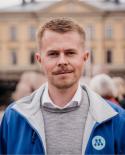
“Europe’s green and industrial transitions will only succeed if we build on local strengths and embrace regional diversity at the heart of EU decision-making. Local and regional authorities must be central to Europe’s industrial transformation, equipped with the right tools to innovate, decarbonise, and deliver. From streamlined permitting to fairer energy systems and stronger skills development, this opinion lays out a roadmap for a competitive, resilient, and climate-neutral Europe — together.” William Elofsson (SE/EPP), Second Deputy Mayor of Gävle and rapporteur for the opinion on the Clean Industrial Deal, made these remarks when speaking at the CoR plenary session.
Elofsson underscored the indispensable role of local and regional authorities (LRAs) in driving the industrial and climate transitions. Their proximity to citizens, contextual knowledge, and agility make them ideal partners in implementing transformative policies. He called for a place-based, partnership-driven approach that ensures EU frameworks reflect local realities, supported by coherent funding and simplified regulation.
In his opinion, Elofsson welcomed the Clean Industrial Deal as a long-awaited and timely strategy to both decarbonise European industry and enhance global competitiveness. He stressed that LRAs are not merely stakeholders but should be treated as innovation platforms, project enablers, and industrial ecosystem builders. He advocated for stronger regional self-governance, enhanced fiscal autonomy, and tailored industrial policies that align with local strengths and address regional challenges.
The opinion highlights several priority areas for a successful Clean Industrial Deal:
- Full alignment of EU funding instruments and enhanced multi-level governance to ensure that LRAs are directly involved in the design and implementation of industrial strategies.
- The development of robust data and monitoring tools to enable evidence-based policymaking.
- Simplification of public procurement rules and regulatory procedures to reduce administrative burdens.
- The mobilisation of both public and private investment, supported by targeted state-aid frameworks.
- Promotion of innovative industrial strategies, including smart specialisation, and strengthened partnerships among public authorities, enterprises, academia, and skills providers.
- A concerted push to reduce energy costs, primarily by boosting the production and availability of clean energy.
Elofsson concluded by reiterating that local and regional empowerment is not optional but essential. Without the active involvement of LRAs, Europe risks undermining the very foundation needed for an inclusive and competitive green transition.